HOT LINE: +86-510-80628100
Large forged steel backup rolls are critical components of rolling mills. However, surface defects dominated by forging cracks frequently occur during the forging process, which seriously hinders process implementation and even results in product scrap. This paper mainly analyzes the crack generation causes from the production process and implementation links of forged steel backup rolls, and discusses effective prevention and control measures.
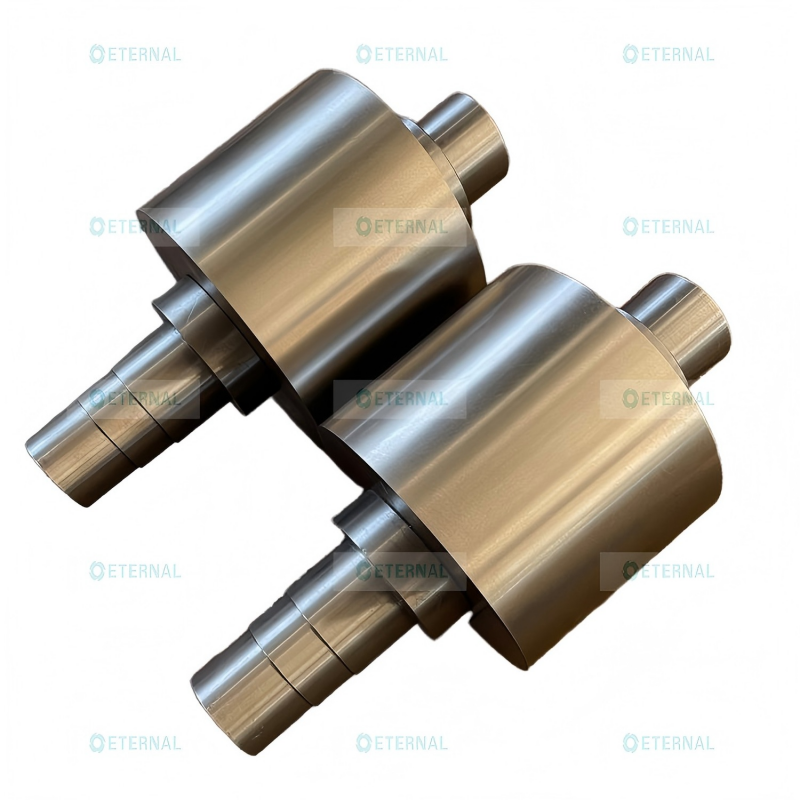
Large forged steel backup rolls are core heavy-duty components of rolling mills. They are used to support work rolls and intermediate rolls, restrain deflection, and ensure the thickness accuracy and surface quality of strip steel. They are widely applied in hot rolling, cold rolling, wide and heavy plate rolling, and special metal(aluminium/copper foil) rolling lines.
At present, vacuum ingots are generally adopted for large forged alloy steel backup rolls. In accordance with forging specifications, the forging process usually undergoes 3 to 8 heating passes to complete the production of final rough forgings. After the forging process, the rough forgings go through a series of heat treatment processes including post-forging heat treatment, quenching and tempering, and differential temperature treatment, as well as rough and finish machining procedures, to finally produce finished backup roll parts.
Ingot surface cracks refer to surface defects detected on steel ingots before they enter the forging process, mostly distributed on the surface between adjacent edges of the ingot.
Large forged alloy steel backup rolls are generally made of cast ingots, and medium-carbon chromium alloy steel is commonly used domestically. Unreasonable control or fluctuation of casting process parameters may generate intense macroscopic thermal stress during cooling, leading to chilling cracks on the surface layer. The surface quality of the ingot mold also affects the local stress distribution of the ingot. Once mold sticking occurs, severe local stress concentration will be induced, triggering crack initiation.
After the formation of transverse cracks, they generally do not expand continuously with further deformation; instead, the crack surfaces gradually open up during forging and form new surfaces of the rough forging. In contrast, once longitudinal cracks occur and are not removed in a timely manner, they will expand toward the core as forging proceeds. Moreover, as backup rolls belong to shaft parts, if longitudinal cracks are located at the steps of the final finished product, they will easily cause insufficient dimensional allowance and lead to product scrap.
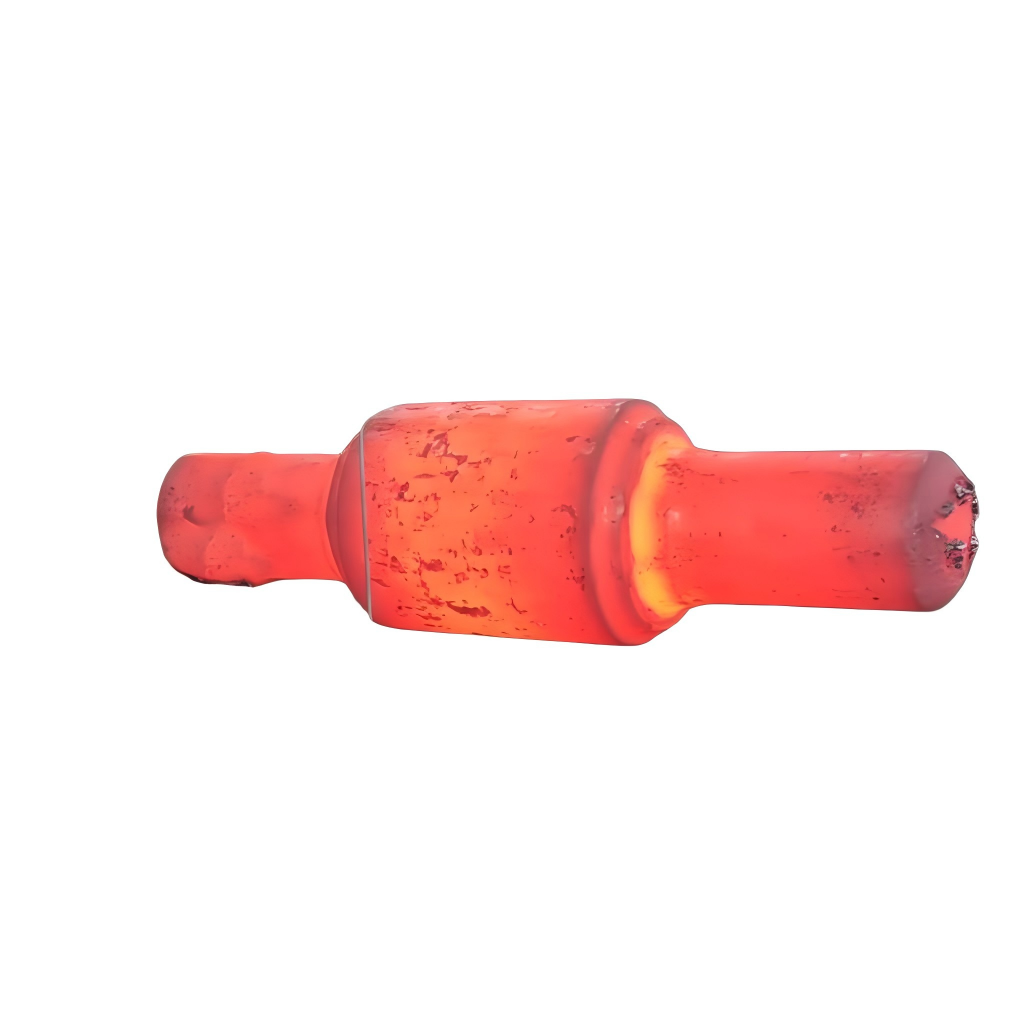
Large deformation is inevitably required during forging to compact the as-cast structure at the ingot core. In the stretching and compaction stage, since the anvil width is usually shorter than the axial length of the billet, sectional forging is necessary. Folding marks form at the overlapping position of adjacent anvil sections; in severe cases, the material at the folding marks tears, resulting in large transverse cracks.
Strictly control chemical composition and effectively remove harmful elements. Adopt vacuum refining and electroslag remelting processes as much as possible to avoid endogenous inclusions such as sulfides, silicates and oxides, as well as exogenous inclusions caused by furnace refractory materials entering molten steel. Maximize the purity of steel ingots to prevent forging cracking at the source.
The structural integrity of the ingot mold has a significant impact on the surface quality of steel ingots. The following effective measures shall be adopted during ingot casting:(1) Strictly control the ladle pouring temperature;(2) Regulate the casting temperature;(3) Select an appropriate pouring speed;(4) Adopt slow pouring at high casting temperature and rapid pouring at low casting temperature.
The influence of demolding on ingot surface quality cannot be ignored. Premature demolding shall be avoided. Slow cooling is adopted to eliminate thermal stress caused by volume shrinkage and structural stress induced by phase transformation during temperature drop.
The quality of oxygen lancing and scarfing technology plays an important role in effective crack removal. Priority shall be given to the removal of longitudinal cracks in the oxygen lancing and scarfing process. Standardize and unify the defect removal operation of operators, ensure the treated area is flat or convex, and avoid concave surfaces after cleaning.
The forging of backup rolls involves coordinated multi-process production with numerous working procedures and a long production cycle. Various random factors in multiple processes lead to differences in the occurrence time, morphology and formation causes of forging cracks. Production shall be carried out in strict accordance with process regulations to ensure operational standardization and traceability, strengthen monitoring of problems during forging, and effectively avoid responsibility evasion between working procedures.