HOT LINE: +86-510-80628100
Roll blank manufacturing adopts processes including electroslag remelting, high-temperature diffusion, forging, as well as post-forging normalizing, spheroidizing annealing and hydrogen diffusion treatment.
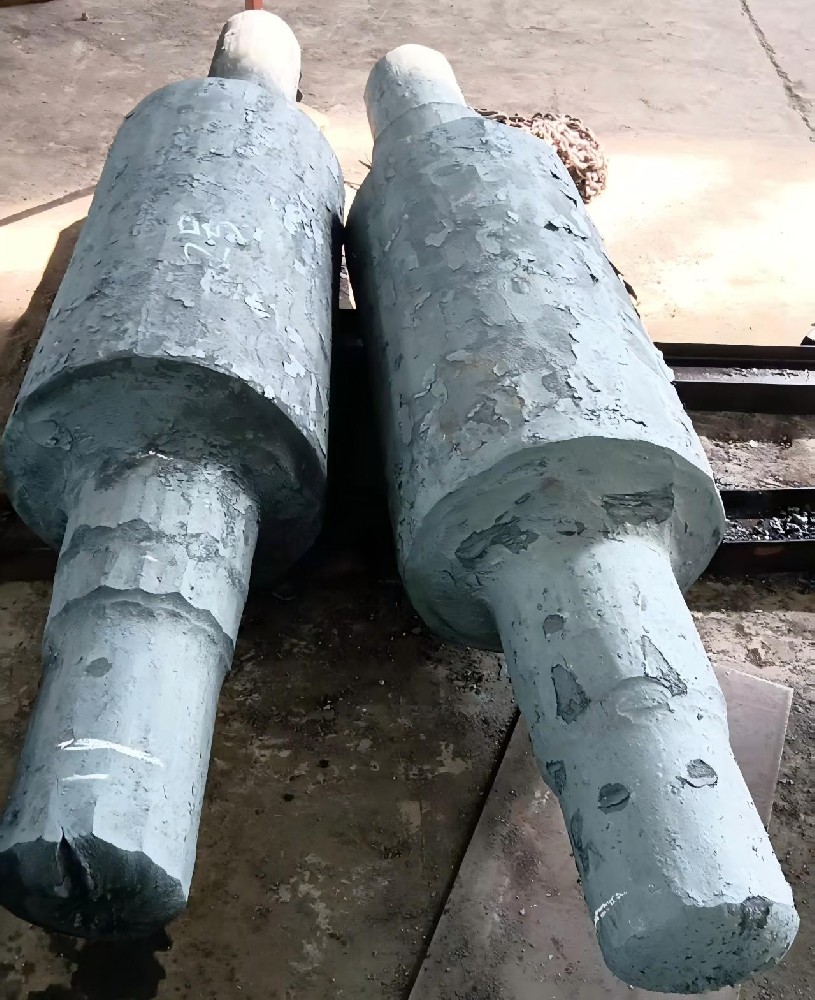
Although electroslag remelting (ESR) technology has been widely applied in the production of forged steel cold rolls, with increasingly fierce market competition in the cold roll industry, metallurgical researchers at home and abroad have successively attempted to manufacture forged steel cold rolls using electric furnace refined steel. Secondary refining refers to transferring part or all of the refining tasks traditionally completed in conventional steelmaking furnaces — such as impurity removal, composition and temperature adjustment, and homogenization — to ladles or other containers. Developed to meet the escalating requirements for higher cleanliness and service performance of steel products, secondary refining boasts superior capabilities for inclusion removal, desulfurization, deoxidation and degassing compared with the traditional single-step steelmaking process. Consequently, the quality of secondary refined steel has been continuously improved, creating favorable conditions for the development of forged cold rolls made from secondary refined steel.
The primary challenge for secondary refined steel cold rolls is ensuring steel cleanliness. Non-metallic inclusions in steel are mainly sulfides and oxides. Improving steel cleanliness requires strict control over molten steel desulfurization, deoxidation and the prevention of secondary oxidation. Multiple targeted measures have been adopted and achieved remarkable results: determining the dosage of deoxidizers and slag materials based on the oxygen level at the electric furnace tapping point, increasing the addition of aluminum deoxidizer before vacuum treatment, maintaining sufficient soft stirring time to promote the full floating of inclusions, and implementing gas-shielded pouring to avoid secondary oxidation of molten steel. Through these methods, non-metallic inclusions such as sulfides and oxides can be controlled below Grade 1.5.
Forging is adopted to manufacture roll blanks to optimize the as-cast structure of steel ingots and enhance their internal quality. When steel ingots undergo forging with a sufficient deformation ratio, dendritic grains in the as-cast structure are crushed and recrystallized into new equiaxed grains, which significantly improves the ductility, strength and other mechanical properties of the metal. In addition, forging breaks down carbides and non-metallic inclusions aggregated at grain boundaries. Combined with high-temperature diffusion and mutual dissolution, these substances are evenly dispersed in the metal matrix, thereby improving the service performance of forgings.
Open die forging is commonly used for roll blank production, consisting of upsetting and stretching processes. During stretching with flat upper and lower anvils, tensile stress may occur at the center of the steel ingot, hindering thorough forging of the core. In contrast, shaped anvil forging ensures triaxial compressive stress on the ingot core, facilitating full compaction of the central structure and guaranteeing the internal quality of forgings.
Forging optimizes the as-cast structure of steel ingots. However, high-carbon alloy steel for forged steel cold rolls tends to precipitate secondary carbides during cooling after finish forging, and in severe cases, dense network carbides will form. Network carbides seriously impair the uniformity of quenching and tempering hardness of roll blanks. Therefore, normalizing is generally applied after forging to eliminate network carbides, refine grains and improve the ultrasonic inspection penetration of roll blanks.
Another key function of post-forging heat treatment is to prepare the microstructure for subsequent quenching and tempering. Spheroidized carbides in pearlite can accelerate carbide dissolution during austenitization in quenching and tempering, increase the carbon content in austenite, and further enhance hardenability. Hence, spheroidizing annealing is also required for roll blanks after forging. Meanwhile, post-forging heat treatment prevents flake defects. Flakes in steel are closely related to excessive hydrogen content. Hydrogen diffusion annealing promotes the outward diffusion of hydrogen, reduces hydrogen segregation, and homogenizes hydrogen distribution in steel, so as to effectively prevent flake formation.
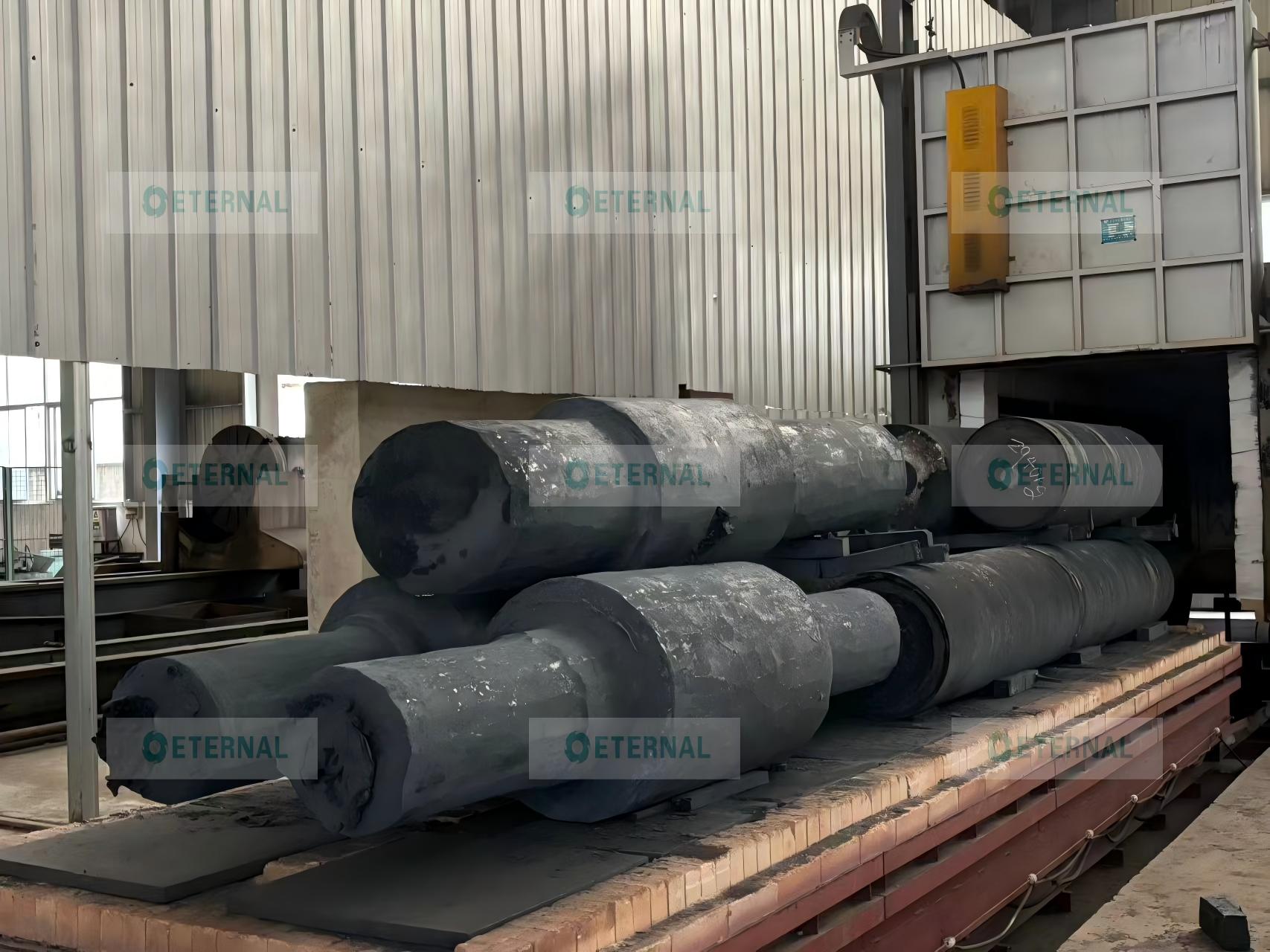
With the rising requirements for hardenability and wear resistance of cold rolls, the material of forged steel cold rolls has evolved toward high chromium content, rising from the initial 1.5% Cr to 5% Cr, and even reaching 8%–10% Cr in the transitional stage. The increase in chromium content raises the carbide volume fraction and wear resistance of steel, yet it leads to insufficient toughness and reduced accident resistance, limiting the wide application of high-chromium cold roll steel. At present, the mainstream development trend is to optimize 5% Cr steel via microalloying technology.
Forged steel cold rolls are products with extremely stringent technical requirements. To meet the strict standards for steel cleanliness, carbide morphology and ultrasonic inspection quality, electroslag remelted steel is widely used for roll blank production. High-temperature diffusion treatment is commonly conducted on steel ingots to improve the uniformity of chemical composition. Forging is applied to densify the material structure of roll blanks. Post-forging normalizing eliminates secondary network carbides, spheroidizing annealing prepares the microstructure for subsequent quenching and tempering, and hydrogen diffusion annealing prevents flake defects.
As the service life requirements for cold rolls continue to grow, applying microalloying technology to improve the wear resistance of cold rolls will become a core development direction. Meanwhile, the adoption of electric furnace refined steel to reduce manufacturing costs will serve as an effective means to strengthen the market competitiveness of forged steel cold rolls.