HOT LINE: +86-510-80628100
The ultra-wide square plate forging for shield cutter heads features a special structure characterized by large width and small thickness. The ultra-wide thin-plate cutter head square plate forging manufactured this time, with dimensions of 5750 mm × 5750 mm × 380 mm, belongs to the field of extreme manufacturing. It presents extremely high difficulty in width expansion and imposes stricter requirements on grain size and molten steel purity control. The traditional process route of "upsetting and drawing + wide-anvil flat drawing + 90° rotary drawing" is very difficult to control. Through process innovation, a new process scheme of "dimension-controlled preforming + rotary anvil-feeding width-expansion drawing + four-side flattening" is proposed. By strengthening the control over smelting and heat treatment processes, the production trial has been successfully completed.
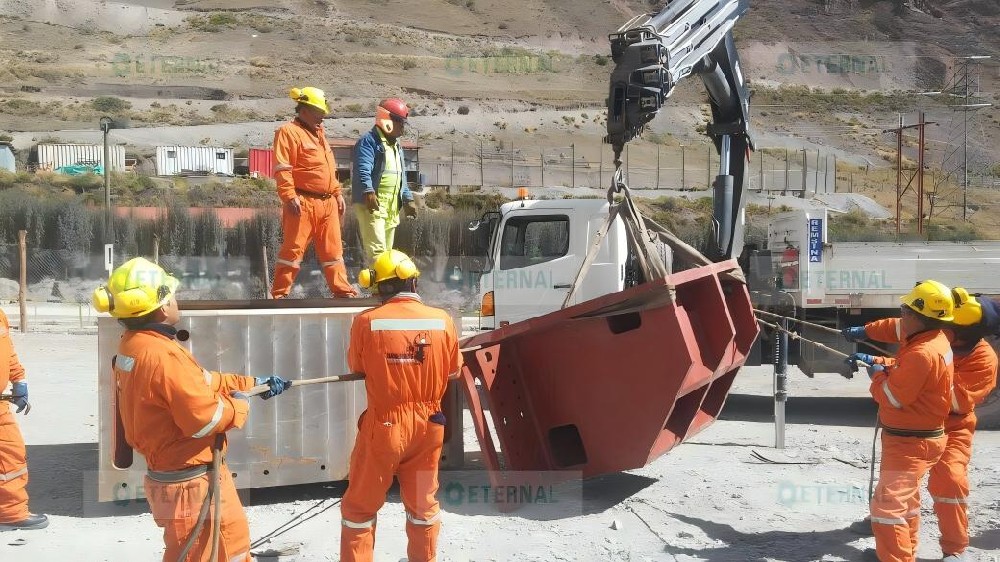
The single weight of the shield cutter head square plate forging is 98,700 kg, and the material is Q345 steel. The main technical requirements are as follows:(1) Non-metallic inclusions shall be graded according to the ISO rating charts in GB/T 10561—2023, with a grade of 2, and the inclusions shall be fine-series Type B;(2) Grain size shall meet Grade 7 specified in GB/T 6394—2017;(3) Mechanical properties: yield strength ≥ 345 MPa, tensile strength ranging from 450 to 600 MPa, elongation ≥ 20%, impact energy (-20℃) ≥ 27 J;(4) Ultrasonic testing shall be accepted in accordance with Level Ⅱ in JB/T 5000.15—2007, and equivalent defects larger than Φ1.6 mm shall be recorded.
The smelting process adopts electric furnace primary smelting – refining – vacuum degassing – vacuum casting.The chemical composition (mass fraction, %) is controlled as:C 0.15–0.18, Mn 1.3–1.6, Nb 0.02, with other elements controlled at the middle upper limits.The detailed process control is as follows.
(1) High-quality steel plate scraps and clean return ends are selected. Riser sleeves with good inner surface quality and low service times are preferred. Residual steel and slag in risers, ingot molds and base plates are thoroughly cleaned before use, and risers are preheated continuously for no less than 5 h.
(2) Phosphorus content (mass fraction) at electric furnace tapping ≤ 0.005%, finished product P ≤ 0.015%; argon pressure during tapping ≤ 1.0 MPa.
(3) Refining time ≥ 120 min. Strong deoxidation and desulfurization are implemented during refining to ensure [O] ≤ 0.003% and S content (mass fraction) ≤ 0.005%. Static blowing time before reheating and tapping ≥ 20 min, with soft argon blowing flow controlled at 30–50 L·min?1.
(4) During vacuum treatment, the effective holding time under high vacuum is no less than 20 min. After qualified chemical composition, argon flow is adjusted for soft blowing, and the soft blowing duration is strictly controlled.
(5) In vacuum casting, the slide gate pressure is properly controlled after start-up. Excessively high argon pressure that causes molten steel oxidation and slag entrapment is strictly prohibited. Argon pressure at the nozzle is adjusted according to molten steel spreading to ensure good fluidity. After teeming completion, the vacuum is broken rapidly and exothermic powder is added promptly.
The overall forming process is:pressing the tong hold and preliminary drawing – wide anvil heavy reduction forging.Operations include upsetting and drawing for billet preparation, upsetting between flat anvils, dimension controlled width expansion drawing for preforming, rotary anvil feeding with upper flat anvil and lower rotary table, and four side flattening and finishing.
Key forging parameters are controlled as follows.
(1) Blank preparation by upsetting and drawing via WHF method:Upsetting and drawing at high temperature is used to forge through and weld internal as cast defects (porosity, cavity-type defects, etc.).Heating temperature: (1240 ± 10) ℃.Reduction per pass: 18%–20%.Anvil width ratio: 0.6–0.8.Anvil offset and overlapping are reasonably controlled to avoid deformation “dead zones”.
(2) Billet upsetting:Upsetting is performed mainly for width expansion.Upset dimensions: Φ3000 mm × 1950 mm to ensure subsequent width and facilitate drawing.
(3) Width expansion drawing between upper and lower flat anvils:Anvil feeding and reduction are determined according to billet length, target width and forging conditions, combined with hammer length.Target length ≥ 5800 mm, width ≤ 5000 mm, reduction 15%.The billet is rotated 180° in the same face after each pass.
(4) Dimension controlled preforming:Preform dimensions: 580 mm × 4800 mm × 4800 mm.Tongue shaped ends and bending are trimmed.
(5) Width expansion drawing by rotary anvil feeding (upper flat anvil + lower rotary table):Rotary anvil feeding is adopted. Based on simulation and hammer length, forging starts at right angles for compaction, then proceeds from periphery toward center.Reduction ratio: 10%–15%.On the premise that anvil feed ≤ deformed height, peripheral feeding is set as large as possible; feeding near the center is 3.0–3.5 times the reduction to prevent center folding.
According to material properties, component structure and dimensions, the heat treatment route is determined as:normalizing – undercooling – temperingto ensure comprehensive mechanical properties.
Immediately after forging, the forging is transferred, cooled by air blast and spray to 400–450 ℃, then charged into the furnace.
· Normalizing temperature: 880–900 ℃
· Undercooling holding temperature: 280–320 ℃
· Tempering temperature: 560–580 ℃
After normalizing and holding, the forging is cooled by forced air blast and uniform spray with fans. Supporting height ≥ 800 mm. The forging is turned every 2 h to ensure uniform cooling rate. When temperature drops to 280–320 ℃, it is charged for undercooling and tempering.
Conclusions
(1) The forging process scheme of “dimension controlled preforming + rotary anvil feeding width expansion drawing + four side flattening” can more effectively weld internal defects. It is convenient to operate, achieves high forging efficiency, and ensures product quality.
(2) The ingot smelting scheme of “selected steel scrap + vacuum degassing + vacuum casting” with strict process parameter control guarantees high ingot purity.
(3) The normalizing stage measures — uniform spray forced cooling + controlled supporting height + timed turning — are beneficial to homogeneity control and stable comprehensive mechanical properties.