HOT LINE: +86-510-80628100
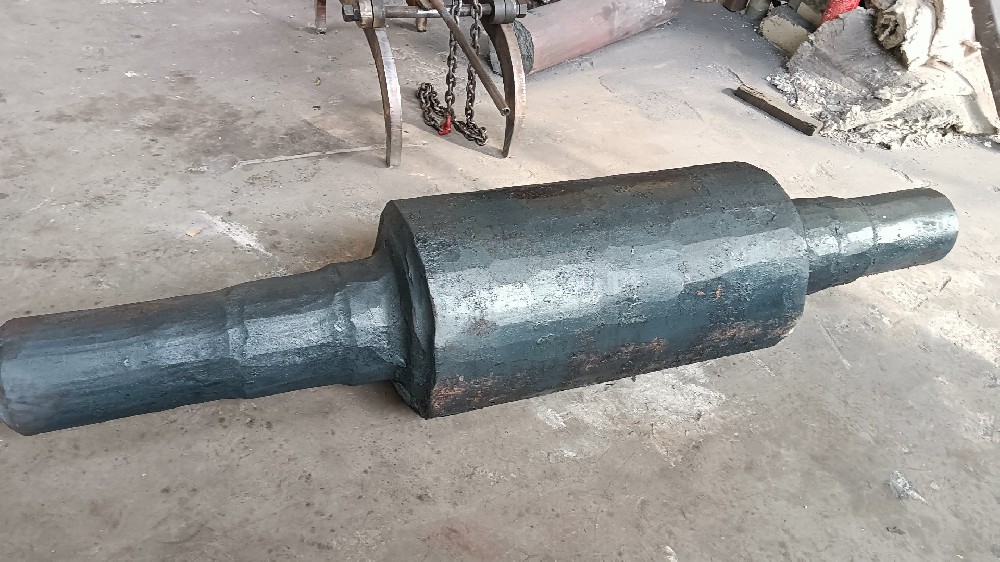
H13 steel, as a widely used hot work die steel worldwide, can obtain a mixed microstructure of martensite and bainite after normal forging process. It has high hardness and is difficult to cut, so spheroidization annealing is necessary. Spheroidization annealing plays a significant role in eliminating residual stress in steel, reducing hardness, and evenly distributing alloy carbides. It also prepares the microstructure for final quenching and tempering heat treatment. Due to the slow cooling rate of H13 steel after forging, the structure becomes coarse and network like carbides appear. After conventional low-temperature spheroidization annealing, there are coarse eutectic carbides and compositional segregation in the core structure. Carbides aggregate at grain boundaries and locally form chain like carbides, while eutectic carbides and secondary carbides aggregate at grain boundaries, strongly affecting the impact performance of the module. Therefore, it is necessary to conduct research on the spheroidization heat treatment process of H13 forgings in order to improve the annealed structure and enhance their subsequent performance.
Experimental materials and methods
The H13 forging test material adopts a 2.1t electric furnace ingot, which is forged into a standard 190mm by a 1800t precision forging machine. The initial forging temperature is controlled at 1050-1100 ℃, and the final forging temperature is ≥ 900 ℃, ensuring a forging ratio of ≥ 4. The 200mm long section is cut with a band saw. To develop a reasonable spheroidization heat treatment process, the actual phase transition point temperature of the material was measured using a DIL402PC thermal expansion analyzer before the experiment. Ac1=872.3 ℃, Ac3=931.6 ℃, Ms=451.4 ℃, Mf=366.1 ℃. Based on the actual phase transition temperature, the processes for this spheroidization test are as follows: ① Low temperature spheroidization annealing at 830 ℃ for 5 hours; ② Ultra refinement treatment at 960 ℃ for 2 hours+low temperature spheroidization annealing at 830 ℃ for 5 hours; ③ Ultra refinement treatment at 1050 ℃+low temperature spheroidization annealing at 830 ℃.
Experimental results and analysis
Low temperature spheroidization annealing process
Low temperature spheroidization annealing is a heat treatment process in which steel or steel parts are heated to around 20 ℃ below Ac1, held for a long time (depending on the steel type and required degree of spheroidization), and then slowly cooled or air cooled to room temperature to obtain spherical pearlite. Observing the microstructure, it was found that although the carbides inside the grains had already spheroidized, there were a large number of chain like network carbides in the grain boundary area, accompanied by band segregation. The reason for this is that the final forging temperature is high after forging, and the cooling rate is slow. H13 steel belongs to hypereutectoid steel, and during the slow cooling process, secondary carbides will precipitate in a network shape, and its alloy content is relatively high. Raw material segregation is inevitable.
Ultra fine processing+low-temperature spheroidization annealing process
The main function of this process is to fully dissolve carbides into austenite, allowing alloy elements to diffuse for a long time. After insulation, it quickly cools to a temperature above the martensitic transformation point, preventing carbides from forming a network and refining the structure. After quenching, perform spheroidization treatment according to the conventional spheroidization annealing process.
Observing the microstructure, it was found that the spheroidized structure obtained by both processes was significantly better than that obtained by low-temperature spheroidization annealing process. The carbide particles were fine, the structure was uniform, and the carbide network structure disappeared completely. Moreover, after treatment with process ③, the segregation of alloy elements was significantly improved. The reason is that after high-temperature insulation, quenching treatment is carried out to quickly cool it down, which can prevent the secondary carbides from forming a network like structure. Then, spheroidization annealing is carried out to allow the uniformly dispersed carbides precipitated from the matrix to grow and form spherical carbides, improving the annealed structure. In addition, the H13 steel treated with process ③ ultrafine treatment completely dissolves the carbides of chromium and molybdenum, evenly and finely distributed in the matrix, improving the segregation of alloy elements after spheroidization annealing.
Conclusion
(1) After forging H13 steel and undergoing low-temperature spheroidization annealing at 830 ℃, the microstructure is coarse, the microsegregation is severe, the spheroidization is incomplete, and most of the carbides are in a network structure, which seriously affects the performance of use.
(2) After forging H13 steel, the microstructure was refined by 1050 ℃ ultrafine treatment and 830 ℃ low-temperature spheroidization annealing treatment, and the segregation of alloy elements was improved, reducing strip segregation and obtaining a uniform and fine spheroidized structure.
(3) Due to the high final forging temperature and slow cooling rate, H13 forgings are prone to the formation of coarse network carbides, which cannot be eliminated during annealing.
Therefore, adding a high-temperature ultrafine treatment before spheroidizing annealing of H13 forgings can suppress the precipitation of network like secondary carbides, obtain a fine pearlite structure, and fully dissolve alloy elements, greatly improving segregation.